What Is Digital Marketing? A Complete Guide for Beginners
Digital Marketing
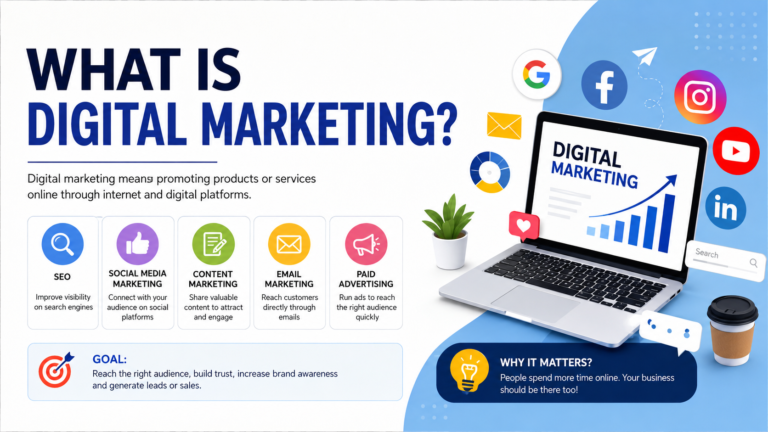
Digital marketing means promoting products, services, or brands through the internet and digital platforms. Businesses use online channels to connect with their target audience, create awareness, build trust, and generate leads or sales.
Types of Digital Marketing
Some of the major types of digital marketing are:
SEO: Improving a website’s visibility on search engines like Google.
Social Media Marketing: Promoting a brand through platforms such as Instagram, Facebook, LinkedIn, and YouTube.
Search Engine Marketing: Using paid search advertisements to reach people searching for specific products or services.
Content Marketing: Creating useful content such as blogs, videos, guides, and social media posts.
Email Marketing: Connecting with customers through emails, newsletters, offers, and updates.
Influencer Marketing: Collaborating with creators or influencers to promote products and services.
Paid Advertising: Running advertisements on digital platforms to reach a specific target audience.
Benefits of Digital Marketing
Digital marketing offers several benefits to businesses:
Wider Reach: Businesses can reach customers beyond their local area.
Targeted Audience: Brands can show their marketing to specific groups of people.
Better Measurement: Businesses can track clicks, traffic, engagement, leads, and sales.
Brand Awareness: Regular online content can help more people discover a brand.
Customer Engagement: Social media and other digital channels allow businesses to communicate directly with customers.
Lead and Sales Generation: Digital campaigns can help attract potential customers and encourage purchases.
Career Opportunities: Digital marketing also offers career paths in SEO, social media, content, advertising, analytics, and other areas.
In Short
Digital marketing is a powerful way for businesses to connect with people online. By using the right digital marketing channels and creating useful content, businesses can increase their visibility, connect with their target audience, and achieve their marketing goals.
What Is Digital Marketing? A Complete Guide for Beginners
Digital marketing has become an important part of how businesses promote their products and services today. People spend a lot of time online searching for information, watching videos, using social media, and shopping.
Because of this, businesses need to reach customers where they spend their time: online.
But what exactly is digital marketing? How does it work? What are its different types, and why is it important for businesses?
If you are a beginner and want to understand digital marketing in simple terms, this guide is for you.
What Is Digital Marketing?
Digital marketing means promoting products, services, or brands through the internet and digital platforms.
Unlike traditional marketing, which uses newspapers, television, radio, posters, and billboards, digital marketing uses online channels to connect with customers.
For example, a clothing brand can promote its products through Instagram Reels, Google Ads, its website, YouTube videos, and email campaigns. All of these activities can be part of digital marketing.
The main goal of digital marketing is not just to show advertisements. It is also about reaching the right audience, creating brand awareness, building trust, generating leads, and increasing sales.
In simple words, if a business uses the internet to market its products or services, it is using digital marketing.
How Does Digital Marketing Work?
Digital marketing usually starts with understanding the target audience.
A target audience is a group of people who are most likely to be interested in a product or service.
For example, a clothing brand selling trendy outfits may target college students and young professionals. A digital marketing course may target students, job seekers, freelancers, and working professionals.
Once the target audience is identified, the business chooses the right digital channels to reach them.
These channels can include:
Search engines such as Google
Social media platforms such as Instagram and Facebook
YouTube
Websites and blogs
Email
Online advertising platforms
The next step is creating useful and engaging content. This could be a blog post, social media Reel, video, advertisement, infographic, or email.
After launching a campaign, marketers track its performance. They can check metrics such as website visits, clicks, engagement, leads, and sales.
This data helps businesses understand what is working and what needs improvement.
For example, if an Instagram advertisement receives many views but very few clicks, the business may need to improve its advertisement or targeting.
This ability to measure and improve campaigns is one of the major advantages of digital marketing.
Types of Digital Marketing
Digital marketing includes several different channels and strategies. Here are some of the most common types.
1. Search Engine Optimization (SEO)
SEO stands for Search Engine Optimization.
It is the process of improving a website so that it can appear more prominently in search engine results.
For example, when someone searches for “best digital marketing course” on Google, businesses want their relevant pages to appear in the search results.
SEO can involve keyword research, creating useful content, improving website pages, and making the website easier for search engines to understand.
2. Social Media Marketing
Social media marketing involves promoting a business through platforms such as Instagram, Facebook, LinkedIn, and YouTube.
Businesses can use posts, Reels, Stories, videos, and other content formats to connect with their audience.
For example, a restaurant can post food videos on Instagram to attract people who are interested in dining out.
Social media also allows businesses to interact directly with customers through comments and messages.
3. Search Engine Marketing
Search Engine Marketing involves using paid advertisements on search engines.
For example, when you search for a product or service on Google, you may see sponsored results at the top of the page.
Businesses can use these advertisements to reach people who are actively searching for specific products or services.
4. Content Marketing
Content marketing focuses on creating and sharing useful content to attract and engage an audience.
This content can include:
Blog posts
Videos
Guides
Infographics
Social media posts
Educational content
For example, a skincare brand can create a blog about skincare routines instead of only promoting its products.
Useful content can help a brand build credibility and trust with its audience.
5. Email Marketing
Email marketing involves communicating with customers and potential customers through email.
Businesses can use emails to share:
New products
Special offers
Newsletters
Updates
Recommendations
For example, an online shopping website may send an email about a sale or recommend products based on a customer’s previous activity.
6. Influencer Marketing
Influencer marketing involves working with social media creators or influencers to promote a product or service.
Influencers can introduce products to their audience through videos, posts, reviews, or other content.
This can be especially useful for industries such as fashion, beauty, food, travel, and lifestyle.
7. Paid Advertising
Paid advertising involves paying digital platforms to display advertisements to a specific audience.
Businesses can run advertisements on platforms such as Google, Instagram, Facebook, and YouTube.
These campaigns can be targeted based on factors such as location, interests, and other audience characteristics.
Benefits of Digital Marketing
Digital marketing provides several benefits to businesses of different sizes.
Wider Reach
Digital marketing allows businesses to reach people beyond their local area.
A small business in India can use online platforms to reach customers in different cities or even different countries.
Targeted Marketing
Digital platforms allow businesses to target specific audiences.
For example, a business can create campaigns based on factors such as location, interests, and audience characteristics.
This can help businesses reach people who are more likely to be interested in their products or services.
Easy Performance Tracking
One major benefit of digital marketing is that campaign performance can be measured.
Businesses can track metrics such as:
Website traffic
Clicks
Engagement
Leads
Conversions
Sales
This information helps marketers understand campaign performance and make better decisions.
Increased Brand Awareness
Regular online content and advertising can help more people discover a business.
Social media posts, videos, blogs, and advertisements can all contribute to building brand awareness.
Better Customer Engagement
Digital platforms allow businesses to communicate directly with customers.
Customers can comment on social media posts, send messages, leave reviews, or provide feedback.
This gives businesses an opportunity to understand their customers better.
Lead and Sales Generation
Digital marketing can help businesses attract potential customers and guide them towards making a purchase.
For example, a Google advertisement can bring a user to a website, where the user can learn about a product and make a purchase.
Digital Marketing vs Traditional Marketing
Digital marketing and traditional marketing both aim to promote products and services, but they use different methods.
| Digital Marketing | Traditional Marketing |
|---|---|
| Uses the internet and digital platforms | Uses offline marketing channels |
| Social media, websites, search engines, email | Television, newspapers, radio, billboards |
| Can target specific audiences | Targeting can be more limited |
| Campaign performance can be tracked easily | Measuring results can be more difficult |
| Allows direct online customer interaction | Direct interaction is usually more limited |
| Campaigns can be changed quickly | Changes may take more time |
For example, a restaurant can advertise through a newspaper or billboard. At the same time, it can use Instagram, Google, and online advertising to reach people who are searching for restaurants nearby.
Both forms of marketing can be useful. The right choice depends on the business, target audience, goals, and budget.
Conclusion
Digital marketing means using the internet and digital platforms to promote products, services, and brands.
SEO, social media marketing, search engine marketing, content marketing, email marketing, influencer marketing, and paid advertising are some of the major types of digital marketing.
For businesses, digital marketing can provide wider reach, targeted marketing, measurable results, better customer engagement, brand awareness, and opportunities to generate leads and sales.
For beginners, learning digital marketing does not mean learning everything at once. Start with the basics, learn one skill at a time, and practise through real projects.
Want to Learn Digital Marketing?
If you want to learn digital marketing in a structured and practical way, Vidya Sarthi can help you take the next step in your learning journey.
Build practical digital marketing skills, understand how online marketing works, and prepare yourself for opportunities in the digital industry.
Start learning digital marketing with https://vidyasarthi.in/and take your first step towards building a digital career.